
Brian and his oldest son, Christopher, flew in from Germany first to get things organized (cars, house, furniture, etc.) before Brian’s wife and youngest son, Patrick, flew over. Staying with his family in Bakersfield and using that as a starting point to mount the hunt for new digs, Brian’s old friend, guitarist Jeff DeHollander, whom he met during Dwight Yoakum’s first USO tour, caught wind that Brian was in town and hit him up to step in for him over at the Chrystal Palace while he went on tour for six weeks.
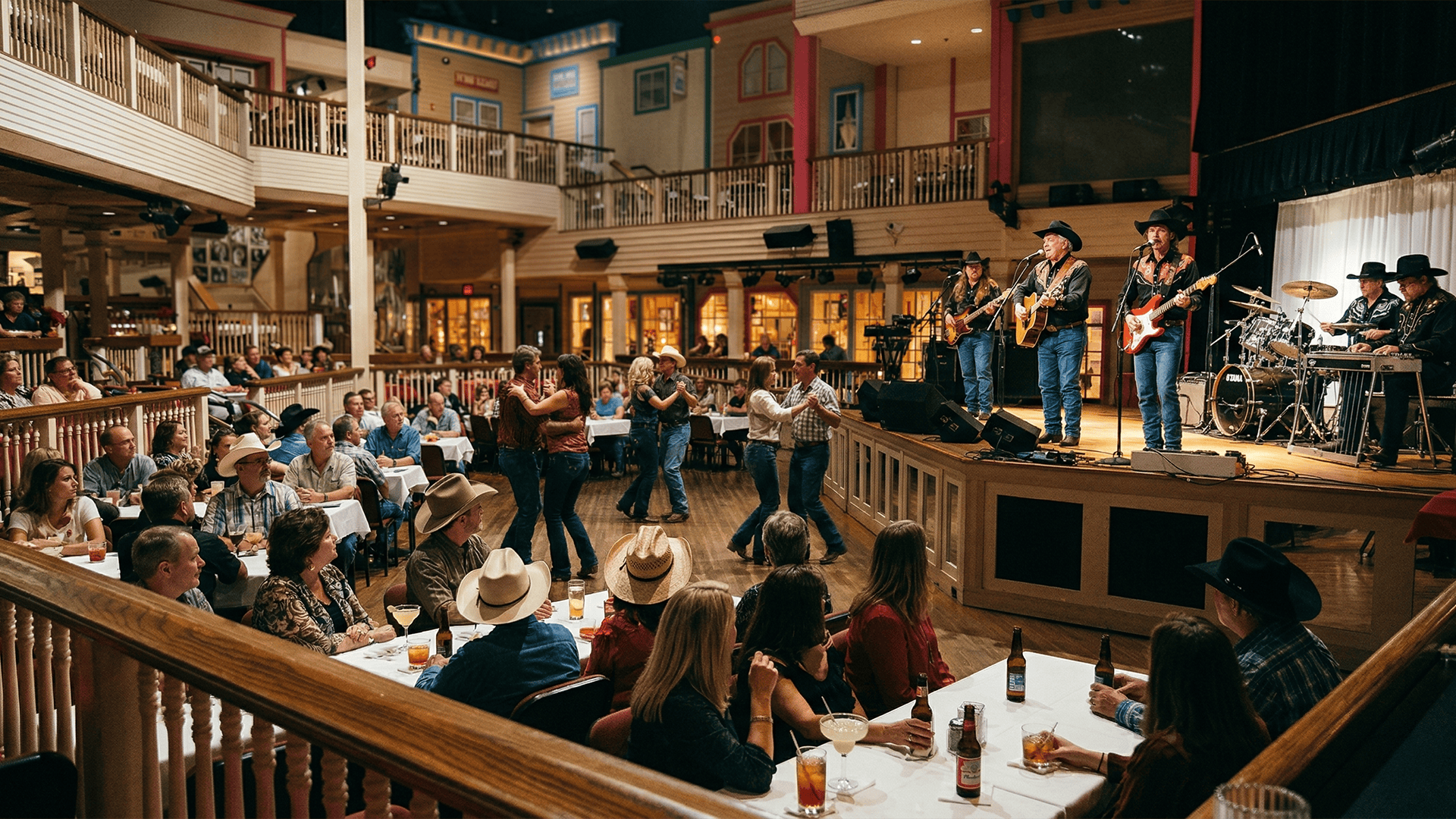
Brian didn’t realize it at the time, and just so you know, Buck Owens’ Crystal Palace in Bakersfield, California, was a legendary country music venue, restaurant, and museum that closed in 2025. It’s the place where the ‘Bakersfield’ sound—named after the city, not Brian’s previous band—began and is basically a shrine to Buck Owens and all his famous friends. As far as Brian knew, he took a six-week gig just to make a paycheck as a hired gun…
Brian wasn’t given a setlist, so as usual, he showed up at the Chrystal Palace expecting to just play solo guitar to a bunch of standards. He was early, so he set up his gear, ordered a beer, and waited. Bassist Mike Gomez arrived next and started setting up his gear, looking around quizzically at the unfamiliar setup, so Brian went over to help him out by introducing himself. Mike smiled ear-to-ear and rummaged through his bag for his book of songs and unceremoniously planted it on a music stand in front of Brian’s gear and said, “This is what we’re doing tonight.” Brian said, “Cool,” and went back to his drink.
When it was time to start, Brian moseyed up to the stage, introduced himself to the rest of the band, tuned his guitar, and opened Mike’s book to the first song, ‘Tiger by the Tail’ by Buck Owens. When it was time to start the song, Brian looked around to see who would be singing, and when nobody stepped up to the center stage microphone, he turned to Mike and asked, “Who’s singing?” and he responded, “You are.” Brian didn’t really know the lyrics, but he knew the opening line, so perplexed, he stepped up to his microphone and started the song.
Just before the chorus came up for the second time, the audience grew excited as a figure in a black duster, wearing cowboy boots, shades, and holding an acoustic guitar, came onstage, stepped up to the center microphone, and started singing. Brian, who was focused on the lyrics, didn’t notice any of this, and upon hearing someone else singing, he stepped back from his mic to see what the hell was going on. And that’s how Brian and Buck Owens first met. Still stunned by the situation, Buck looked angrily from the side at Brian and pointed at his microphone. Getting the gist, Brian snapped out of it and stepped up to his mic to accompany Buck.
Buck had a lot of health issues at the time, and at times he couldn’t sing whole songs, so when Buck stepped offstage to rest, Brian would pick up singing lead. And that’s how the next six weeks went…
Camarillo was a charming, family-friendly city in Ventura County, California, known for its Mediterranean climate, agricultural roots, and scenic mountain views. Just an hour away from his new offices at Quantum Digital in Santa Monica and Capitol Studios in Hollywood via the scenic Pacific Coast Highway, it was the perfect place for Brian and his family to settle far enough from the chaos that is LA.
Once settled, Brian reached out to his agent to get a sense of the lay of the land, and she immediately suggested he go on tour. Brian didn’t have the first clue how to set up a tour, so he contacted the only person he knew who did—Mike Lieberberg. However, Mike was in Germany and had no desire to fly over and manage things, so he coached Brian through it, such as getting the record company to fund the project in exchange for a new album, finding the people to transport and set up the sound system, hiring security to manage the events, and so on. All Brian really had to do on his own was find the musicians.
Through his ties at Capitol, Brian was able to find some worthwhile bands to sit in with. You know, professional-grade acts that weren’t so busy as to interfere with Brian’s family life. There was a Richie Valens revival band and an arena rock cover band that he played with regularly at the Whisky a Go Go on the Sunset Strip. And it was through these groups that Brian met Marvin Huntsman, Rusty Simms, and Nadundo Abasi. Torrey Gerardo and Tiffany Janis were the girlfriends of Marvin and Rusty and were professional backing singers who had toured with the likes of Huey Lewis and the News, Joe Cocker, and Diana Ross. Brian had a band!
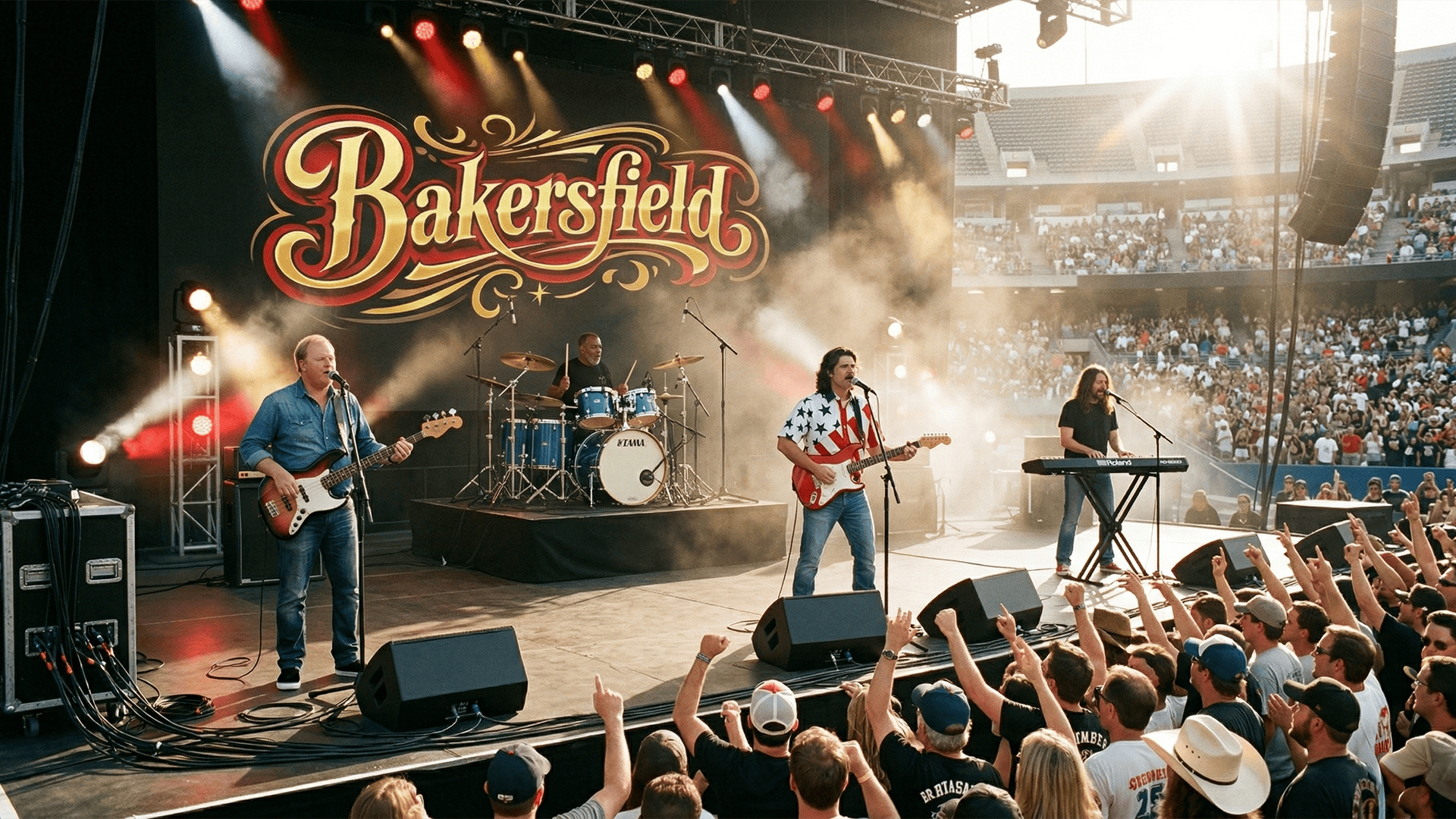
The 2001 Made in the Shade Live Tour was a series of 16 shows with attendance levels Brian had rarely experienced before. The tour featured cameos from old friends and fellow USO tourmates Joe Diffie, Jeff DeHollander, and Vasser Clements. As agreed with Sony, everything was recorded, which Brian compiled to produce the Made in the Shade Live album, which was released the following year to huge fanfare.

After wrapping up the 2001 tour, Brian was tired of performing the same old, worn-out tunes, even if they were his, and he decided to take a break and enjoy some family life. However, he didn’t abandon his musical roots or the film industry.
He frequently made trips to Capitol Studios, where he worked on a variety of projects. Both studios A and B were ideal for recording orchestras, and Brian was an old hand at that, so he produced soundtracks for projects like the video game BioShock 2, movies such as GirlFight and Coyote Ugly, and albums for Al Jarreau, Diana Krall, and Elliot Smith.
Diving headfirst into the movie scene, Brian’s soundtrack work earned him a spot in the Motion Picture Association (MPA). Working from his home studio in Camarillo, he handled post-production for a slate of now-iconic indie films, including Requiem for a Dream, Best in Show, Donnie Darko, Real Women Have Curves, Lost in Translation, Napoleon Dynamite, Brokeback Mountain, and the documentary March of the Penguins.
Brian crossed paths with cinematographer William Hellmuth while they were in the thick of post-production for Donny Darko. William had this intriguing film idea he wanted to turn into a screenplay, but there was one hitch: Brian wasn’t a screenwriter. His experience had mainly been in writing technical documents, but he had a strong desire to dive into the creative side of filmmaking. Realizing he needed some help, he called upon his friend Abraham Sherman, an aspiring screenwriter and fellow poker enthusiast.
What followed was a year of brainstorming sessions, late-night phone calls, and lots of poker games as the trio worked hard to shape and finalize the screenplay for The Black Dawn. Once they had it just right, William took the reins and pitched the project around Hollywood. After a few years of navigating the industry, their efforts paid off, and The Black Dawn premiered in 2009 as a made-for-TV movie.
Brian was feeling a bit restless again and began looking around for new projects, so he reached out to his friend, bassist Jose Martinez. They had previously teamed up at Capitol Studios, and Jose’s current gig was with a Santana tribute band called Savor. However, the band’s guitarist wasn’t quite capturing Santana’s signature style, and Jose thought of Brian for the role.
When Brian showed up to audition, he didn’t just mimic Tito Santana’s guitar playing—he really embraced the legendary musician’s stage presence and mannerisms. This authenticity blew everyone in the band away, and they offered him the spot right then and there. Excitement buzzed in the air as they kicked off their Southern California tour.
Over 22 shows with Savor, Brian delivered stellar performances. The tour culminated in a major televised event that both KTLA and the Los Angeles Times celebrated as “electrifying” and filled with “double-take moments.” The music was on point, and the band’s chemistry was electric, but as the tour rolled on, tensions started to bubble up among certain band members. Not wanting to get caught up in any drama, Brian decided it was time to step back and look for new opportunities once the tour wrapped up.
By the end of 2005, the Los Angeles population was starting to overflow into Ventura County. With Camarillo bustling and feeling more crowded by the day, Brian and his wife decided it was time to move on. They packed their bags, sold their house, strapped the boys into the car, and set off for the spacious, relaxed lifestyle of the Rocky Mountains…
Fun Fact: While still in California, Brian’s wife, Inge, wanting to stay in touch with her German heritage, started DJing for a small German internet radio station. Brian was brought into the mix when the station owners sought a way to reduce hosting and licensing costs. Brian, with extensive industry ties, knew exactly which attorneys to talk to, and together they found a loophole in the law that allowed internet radio stations to broadcast legally into other countries from the States at much reduced cost. But that wasn’t enough. Brian had to develop software to mitigate the inevitable latency issues that arose during live internet broadcasts. The software was a huge success, and he later patented it and licensed it to Google, Microsoft, and Apple. That software is now a constituent part of every mobile device today. Patents:
Publication number: 20030191584, Patent number: 6424910.